30 August 2026 · 4 min read
5 Signs Your Welding Machine Needs Repair, Not Replacement
Before you write off a machine as dead, look for these signs — most of them point to a fixable fault, not a reason to buy new.
1. It trips the breaker or won't power on at all
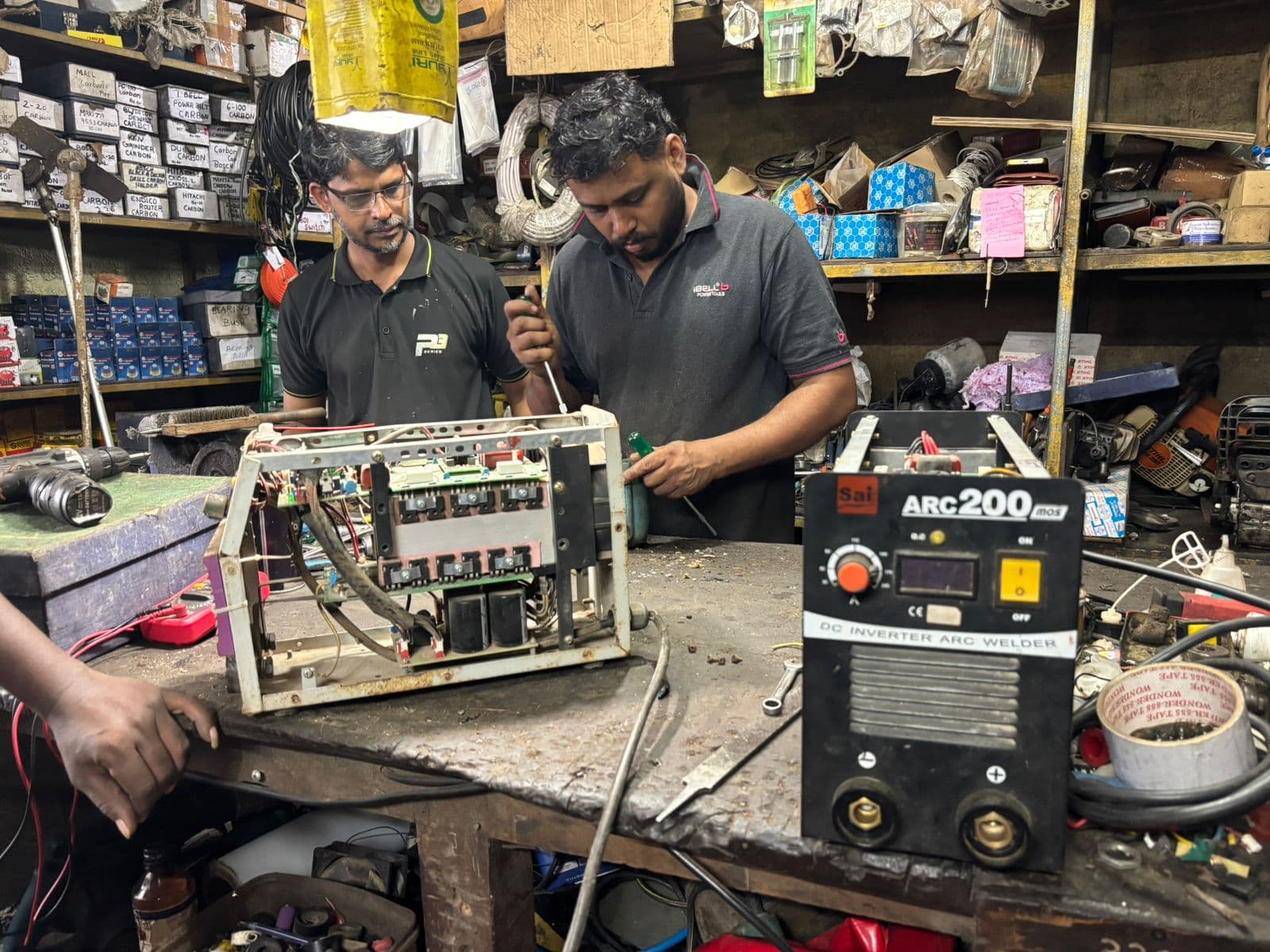
A machine that refuses to power on, or trips the breaker the moment it's switched on, feels like a dead end — but it's one of the most common and most fixable faults there is. It usually points to a short in the primary circuit, a failed switch, or a fault in the input rectifier stage, not a machine that's beyond saving.
Before assuming the worst, check the obvious first: the power cable, the plug, and the breaker itself. If those are fine, the fault is internal and needs a bench diagnosis rather than guesswork.
2. The arc is weak, unstable, or wanders
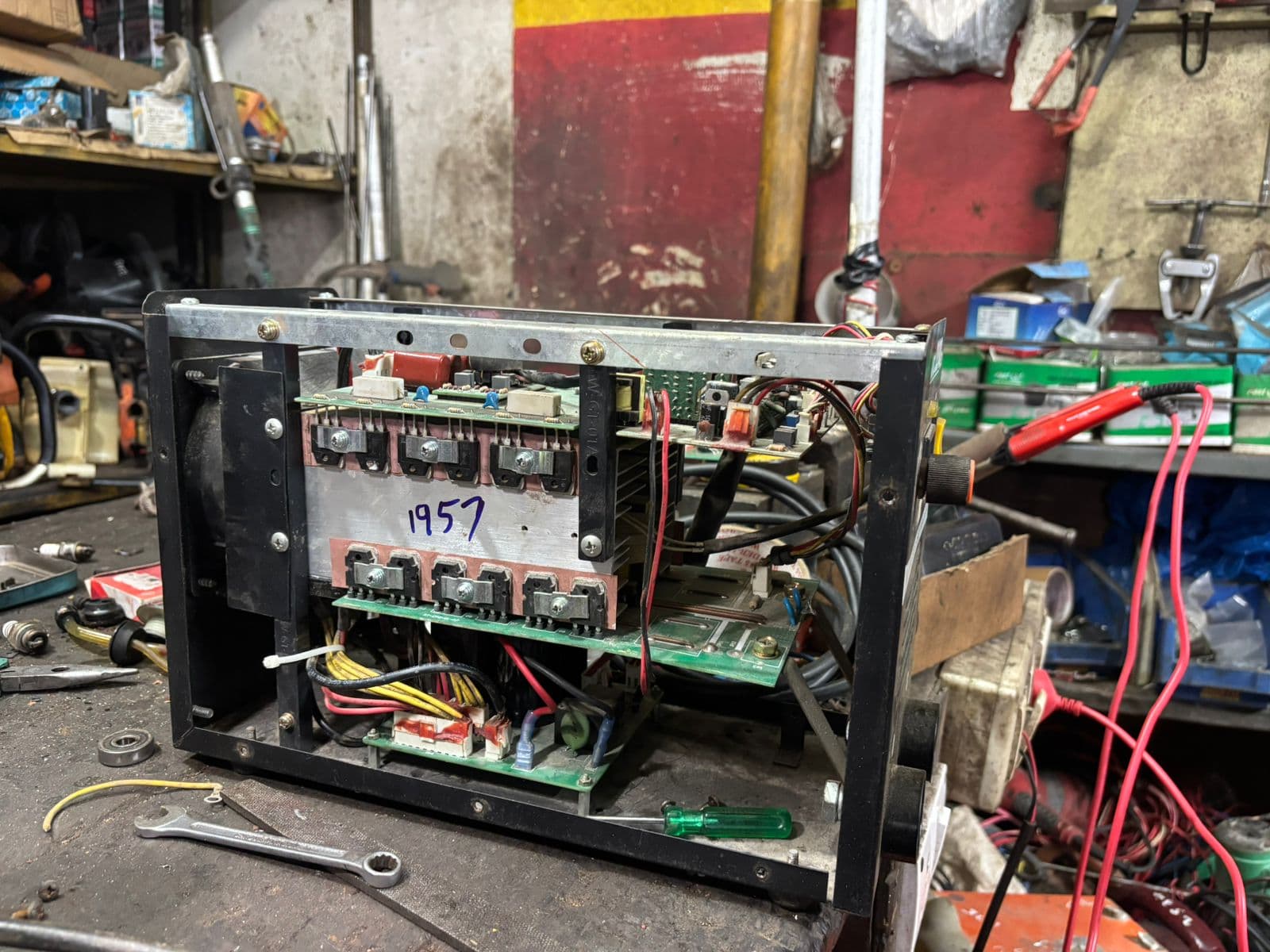
An arc that won't hold steady — flickering, wandering, or too weak to penetrate properly — is often blamed on the electrode or technique, but it's just as likely to be the machine. Worn output terminals, a failing inverter board, or an incorrectly calibrated current control can all produce exactly this symptom.
If the problem shows up across different electrodes, cables, and even different operators, it's worth ruling out the machine itself before anything else.
3. It overheats and shuts down mid-job
Thermal shutdown during a job is the machine protecting itself — but if it's happening well within the rated duty cycle, something's wrong. Common causes include a clogged air path restricting cooling, a failing fan, or a power module running hotter than it should due to a developing fault.
A clean-out and fan check is worth trying first. If the shutdowns continue after that, it's a sign of a deeper electrical issue.
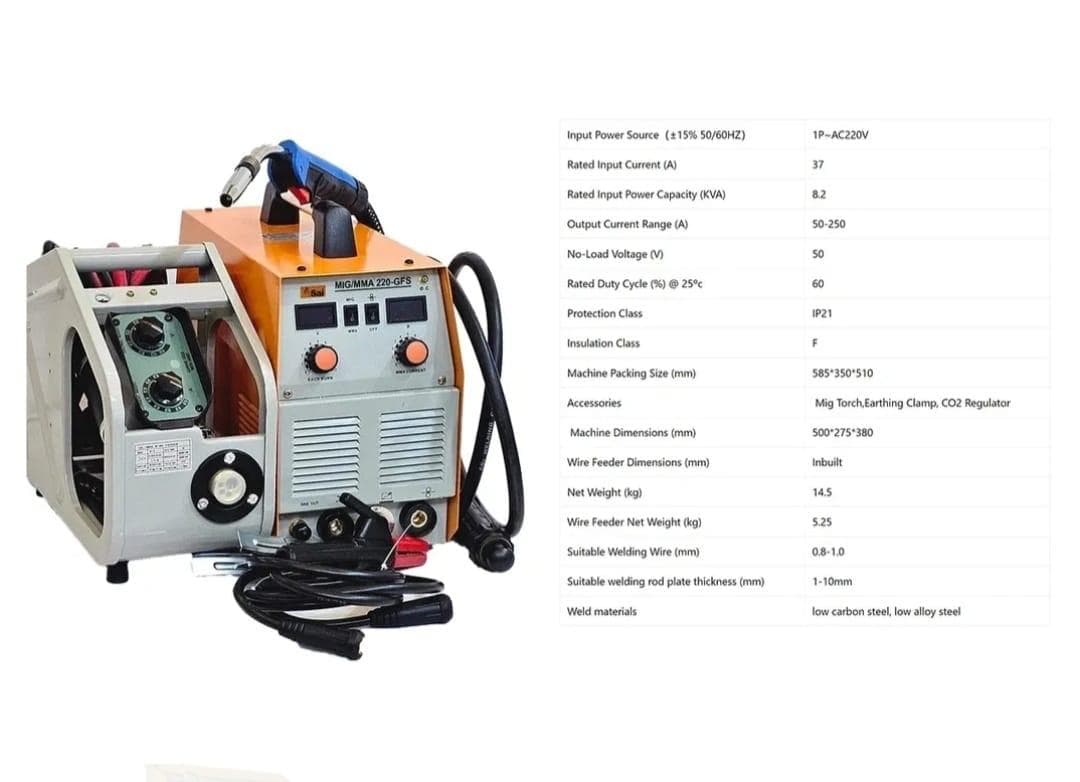
4. MIG wire feed is inconsistent or birdnesting
Stuttering wire feed, birdnesting at the drive rolls, or feed that speeds up and slows down on its own usually traces back to worn feed rollers, a damaged liner, or a feed motor control fault — not the wire spool itself. These are also some of the cheapest and fastest faults to fix.
5. You smell burning, see sparks, or spot scorch marks
Any burning smell, visible sparking from the case, or scorch marks near the control panel is worth stopping and getting looked at immediately — both for the machine's sake and for safety. These are almost always symptoms of a component-level fault that's still repairable if caught before it cascades into further damage.
The bottom line
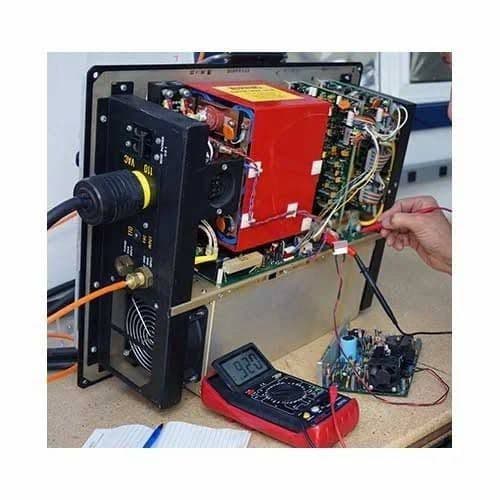
Most 'dead' welding machines are actually a single failed component away from working again — a driver IC, a blown MOSFET, a worn feed roller, a cracked solder joint. Proper diagnosis before any repair means you only pay to fix what's actually broken, and you find out early if a repair genuinely isn't worth it.
RELATED SERVICE
Welding Machine Repair
Fast, accurate fault diagnosis for every welding machine type
View service details →